
Executive Summary — Statutory Reference Points
The Deposit Cleaning Landscape in London, at a Glance
- 54% of all formal deposit disputes adjudicated by the Tenancy Deposit Scheme (TDS) cite cleaning as the primary or contributing cause of deduction — making it the single largest category of contested checkout charge in England and Wales.
- Cleaning disputes outpace damage (49%), redecoration (31%), gardening (14%) and rent arrears (10%). Categories overlap; a single £400 deduction routinely appears under two or three headings simultaneously.
- The average tenancy deposit in London sits between £1,800 and £2,400. A typical contested cleaning deduction of £250 to £500 therefore represents between 10% and 28% of the tenant's capital at risk.
- The Tenant Fees Act 2019 (Schedule 1, Permitted Payments) renders void any tenancy clause obliging a tenant to use a named commercial cleaning contractor. Such a clause is a prohibited payment and is unenforceable.
- Deposits must be protected in a government-authorised scheme under the Housing Act 2004, Part 5, Sections 212–215. Where a landlord fails to protect correctly, the tenant may recover between one and three times the deposit sum at court, and a Section 21 notice cannot be validly served.
- The burden of proof rests entirely with the landlord. In every adjudication, deterioration must be demonstrated as material and beyond fair wear and tear, evidenced by dated, signed photographic inventory.
- Under the doctrine of betterment, no landlord may deploy a deposit to return a property to a hygienic condition superior to that recorded at check-in.
- East London's water supply, at 300–350 mg/L calcium carbonate, makes limescale the single most frequently failed item on Newham checkout inventories.
1. The Statutory Architecture: Who Actually Decides What a Clean Property Looks Like?
The tenancy deposit is not a discretionary maintenance fund held at the landlord's pleasure. It is a statutory instrument governed by a defined body of legislation, adjudicated in England and Wales by three government-authorised bodies: the Tenancy Deposit Scheme (TDS), the Deposit Protection Service (DPS) and mydeposits. Understanding which of these holds your deposit — and how each approaches cleaning evidence — determines precisely how a deduction argument must be constructed or resisted.
Part 5 of the Housing Act 2004 imposes an absolute duty on the landlord (or the letting agent acting on their behalf) to protect the deposit within thirty days of receipt, to serve the Prescribed Information and the scheme's terms, and to supply proof of protection. Failure to comply is not a technicality. Section 214 of the Housing Act 2004 provides that the tenant may apply to the county court and secure compensation equal to one, two or three times the deposit sum, while a landlord who has not protected correctly cannot serve a valid Section 21 notice under the Housing Act 1988. The practical consequence for the tenant is straightforward: a landlord who has mishandled the deposit is in a materially weaker position to contest cleaning deductions, because the entire disputes apparatus operates against them. The full statutory text of the scheme obligations is published through UK Tenant Fees Act 2019 (Legislation.gov.uk) and the underlying Housing Act provisions.
1.1 The Tenant Fees Act 2019 and the Death of the Mandatory Contractor Clause
The most widely misrepresented provision in checkout practice concerns cleaning contractor mandates. It remains common for tenancy agreements in Newham, Plaistow and Canning Town to contain a clause stating that the property must be professionally cleaned at the end of the tenancy to a standard specified by a named firm, or with a receipt from a recognised contractor. Since 1 June 2019, such clauses have been unlawful.
Schedule 1 of the Tenant Fees Act 2019 defines an exhaustive list of permitted payments. A requirement to pay a specific cleaning company — or to produce an invoice from one — falls outside that list. The statutory guidance is unambiguous: a landlord or agent may require that the property is returned in the same condition it was let in, allowing for fair wear and tear, but may not require the tenant to use a particular supplier or pay for cleaning as a condition of the tenancy. Any clause to that effect is not merely unenforceable; it is a prohibited term, and where payment is taken it is repayable.
The important nuance is that the Act does not remove the tenant's underlying obligation to return the property in an equivalent condition. A tenant cannot rely on the Act to leave a property uncleaned and then contest a deduction on the basis that they were not compelled to employ a contractor. The correct reading is this: professional cleaning is an evidentiary method of discharging a contractual obligation, not a legal requirement in itself. The obligation is to achieve the standard, not to purchase the service.
1.2 The Doctrine of Betterment
Betterment is the legal principle preventing a claimant from recovering more than their actual loss. In the tenancy deposit context, it operates as a hard ceiling on deductions. The check-out standard is benchmarked to the check-in condition — not to a hypothetical show-home condition, and not to the landlord's personal preference for how a property 'should' look.
If a check-in inventory, whether photographic or written, records pre-existing limescale on a shower screen, discolouration to silicone sealant, stained grout, or a worn carpet with flattened pile, the landlord has no claim to restore that element to a pristine condition at the tenant's expense. The deduction is limited to material deterioration caused by the tenant beyond ordinary use. This is why the condition of elements that decay naturally with time — not just cleaning — is so frequently contested, and why a dated photographic record at the start of the tenancy is the most powerful single document in any dispute.
1.3 The Burden of Proof: An Evidential Asymmetry
Deposit adjudication is not a court process, but it applies the civil standard on a documentary basis. Adjudicators at TDS, DPS and mydeposits work only from what is submitted to them. Oral assertion carries no weight. Vague references to 'cleaning required' do not survive scrutiny. What survives is: a signed and dated check-in inventory, an equivalently rigorous check-out report, time-stamped photographs demonstrating material deterioration, comparative images (before and after), written invoices or receipts evidencing actual cost incurred, and evidence of the tenant's right to respond.
The burden sits with the landlord throughout. The tenant is not required to prove they cleaned; the landlord is required to prove that the property was not clean beyond fair wear and tear. Reviewed against the Tenancy Deposit Scheme (TDS) Adjudication Guidelines, this asymmetry explains why a disciplined, well-documented checkout — supported by a professional invoice from a firm that provides a standardised checklist — reliably defeats speculative deductions that would otherwise be accepted informally.
2. The Adjudication Evidence Base: What the Numbers Actually Reveal
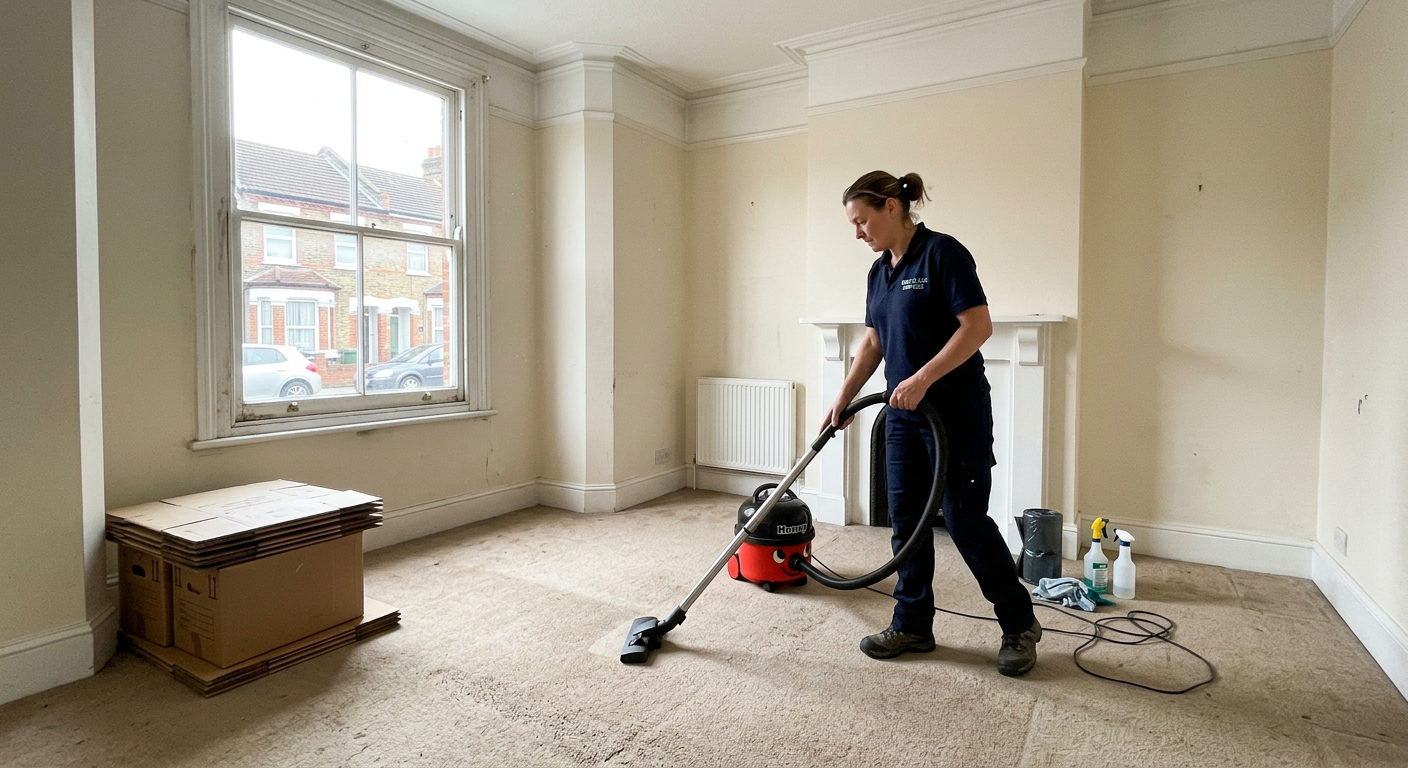
The dispute statistics published annually by the tenancy deposit schemes are frequently quoted and rarely interrogated. Cleaning accounts for 54% of adjudicated disputes — an extraordinary concentration. The reason is not that tenants systematically fail to clean. The reason is that cleaning is the only deduction category in which the standard is subjective in the absence of documentation, and in which the landlord can assert deterioration without any measurable unit of loss.
Damage (49%) is usually self-evident and photographable: a broken door, a burn in a worktop, a hole in plaster. Redecoration (31%) involves traceable deterioration in decoration with a dateable cause. Cleaning, by contrast, is a binary assertion — 'this was clean, and now it is not' — which is why adjudicators require photographic proof of both states, not one.
| Dispute category | Share of adjudications | What the landlord must prove | Common failure point |
|---|---|---|---|
| Cleaning | 54% | Materially dirtier at check-out than at check-in, evidenced in both states | No check-in photographs; no itemised schedule |
| Damage | 49% | Physical deterioration beyond reasonable use, with repair cost | Betterment pricing; no written quotations |
| Redecoration | 31% | Staining or marking beyond fair wear; age-adjusted cost | Ignoring the usable lifespan of the decoration |
| Gardening | 14% | A written garden obligation in the tenancy, plus neglect evidence | No garden clause in the contract |
| Rent arrears | 10% | Rent statements and ledger entries | Arrears offset wrongly against cleaning claims |
The figures above are drawn from the dispute categories recorded across the authorised schemes, including the The Deposit Protection Service (DPS). Because a single checkout may be contested under several headings simultaneously, the percentages exceed 100% in aggregate; they measure involvement, not exclusive cause.
3. Fair Wear and Tear versus Deductible Dirt: The Definitive Boundary
Fair wear and tear is defined in adjudication practice as deterioration arising from normal daily use of the property, having regard to the age, quality, condition and expected lifespan of the element, the number and profile of occupants, and the length of the tenancy. It is not a synonym for damage, and it is not a synonym for neglect. The distinction is functional: wear is inevitable and unforeseeable in its exact form; neglect is the failure to perform reasonable routine maintenance and cleaning during the tenancy.
The most contested terrain in London sits in the middle ground — grout that has discoloured, sealant that has blackened, chrome that has dulled, a carpet whose pile has compressed under furniture. Each can be either wear or dirt depending on causation and on what was recorded at check-in. The table below sets out the operative boundary.
| Element | Lawful fair wear and tear | Deductible deterioration | Evidential test applied |
|---|---|---|---|
| Limescale on tapware and shower glass | Light film where check-in recorded existing scale; gradual opacity over a long tenancy | Heavy encrusted scale, blocked aerators, opaque screen requiring acid descaling | Check-in photograph of the same fixture; tenancy length |
| Silicone sealant blackening | Surface discolouration where the sealant is beyond its service life | Deep mould penetration where the tenant defeated ventilation or never cleaned | Age of sealant; evidence of extractor fan function |
| Oven interior and grill pan | Light ambering of enamel consistent with routine roasting | Carbonised fat layers on the roof, door glass and runners; smoking residue | Comparative photographs; degreasing time recorded |
| Carpet condition | Pile flattening under furniture; general fading; aged pile loss | Spill staining, pet odour, ground-in soil affecting the whole room | Age of carpet; whether professional extraction was reasonable |
| Wall scuffing | Minor marks near doorways and furniture lines | Widespread marking, crayon, adhesive residue, unapproved fixings | Photographic extent and decoration age |
| Grout discolouration | Even greying of cementitious grout over time | Localised black mould colonisation in shower zones | Ventilation record; check-in condition |
| High-level dusting | Not applicable — dust is never wear | Dust on skirting, cornices, extractor hoods, radiator fins | Photographed with scale reference |
| Light bulbs and batteries | Failed lamps through normal use | Only where the tenancy specifies replacement | Contractual term required |
Two operational rules follow. First, an adjudicator will not award a deduction for an element that cannot be compared to a check-in record — the landlord's case collapses for want of a baseline. Second, an adjudicator will discount an award where the claimed standard exceeds the check-in standard, on betterment grounds. Both rules favour the tenant, provided the tenant does not undermine their own position by returning the property in a demonstrably worse state than the evidence supports.
For tenants across the borough facing an imminent inspection, engaging a specialist service that issues a dated, itemised completion document transforms the dispute landscape. Our local technical dispatch team can be reached directly at 020 8079 9511 (tel:02080799511) for transparent fixed quotes, same-day scheduling, and certified service guarantees covering end of tenancy cleaning in Plaistow and the surrounding wards.
4. Newham's Water Chemistry and the Descaling Imperative
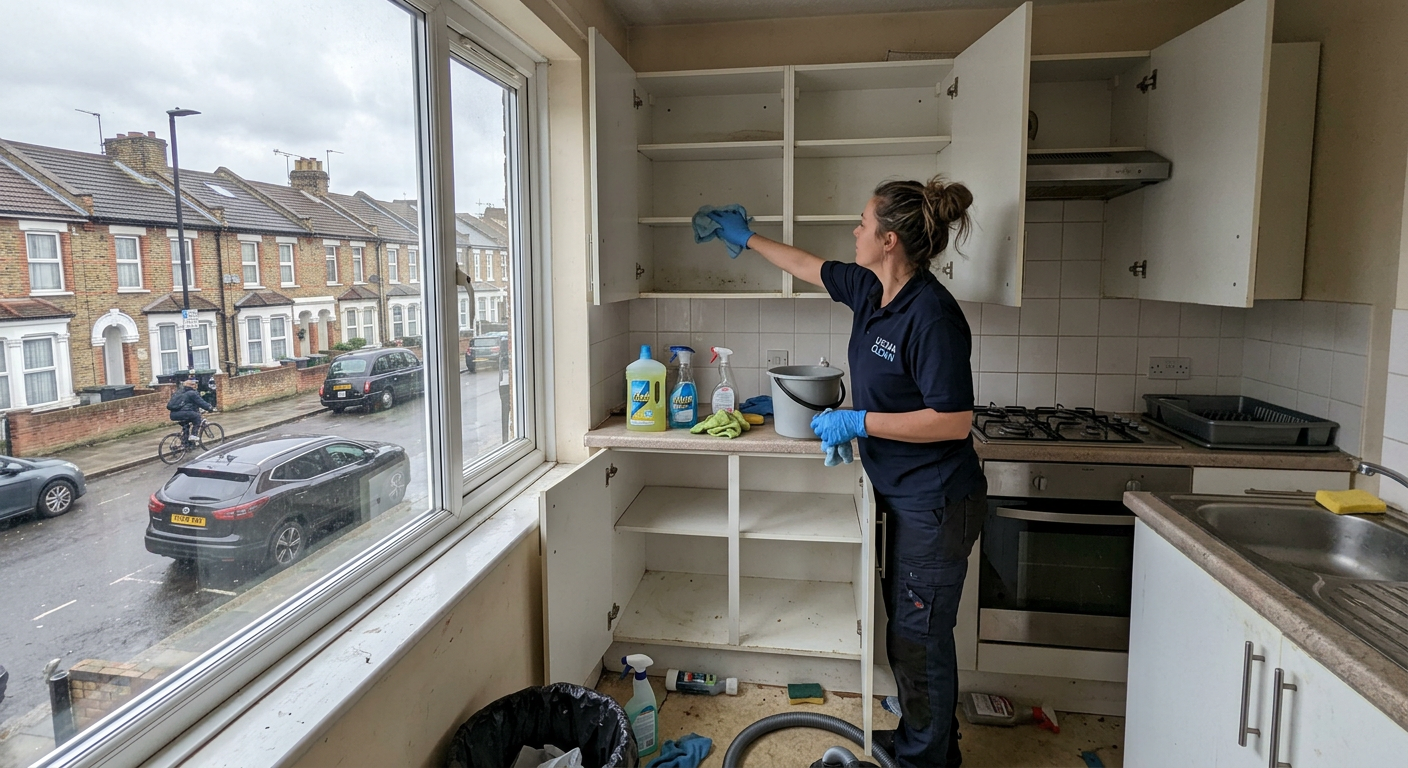
The single most frequent reason a Newham checkout fails is not dirt in any conventional sense. It is calcium carbonate. Thames Water supplies East London at a total hardness of approximately 300 to 350 mg/L as calcium carbonate — classified as very hard. The chemistry is well understood: calcium bicarbonate in solution is thermally unstable. When water is heated, it decomposes according to Ca(HCO₃)₂ → CaCO₃ + H₂O + CO₂, precipitating insoluble calcium carbonate onto the hottest available surfaces. Kettles, immersion elements, shower heads, tap aerators, the water line in toilet pans, and glass shower enclosures are therefore scale-prone by design, not by neglect.
This has three consequences for deposit disputes. First, limescale is the number one failed item on inventories in Newham, and it is frequently claimed in full even where a check-in record shows existing scale — a classic betterment violation. Second, limescale cannot be removed by general-purpose detergent, and attempting to do so with abrasive pads causes permanent scratching to chrome and glass, converting a £0 cleaning item into a £150 replacement item. Third, the correct remediation is chemical, not mechanical: citric acid, formic acid or a proprietary acidic descaler, applied with dwell time, followed by mechanical agitation only with non-abrasive media.
| Agent | Active chemistry | Correct use | Ineffective or hazardous use |
|---|---|---|---|
| Sodium hypochlorite (bleach) | Oxidising halogen | Sanitising non-porous surfaces; whitening grout | No effect on limescale; corrodes chrome and aluminium; damages natural stone; never mix with acid |
| Acidic descaler (citric/formic) | Proton donor, dissolves CaCO₃ | Tapware, shower glass, kettle elements, toilet pans, aerators | Attacks acid-sensitive marble and enamelled cast iron if over-dwelled |
| Quaternary ammonium biocide | Cationic surfactant | Residual mould prevention on sealant and grout | Not a descaler; leaves film if unrinsed |
| Hydrogen peroxide formulations | Oxidiser, oxygen-releasing | Grout brightening without chlorine odour | No descaling action; requires contact time |
The operational lesson is that a checkout clean in E16 or E13 cannot be executed with a supermarket spray and a cloth. It requires a sequenced chemical protocol, correct dwell times, and knowledge of which substrates will be destroyed by the wrong agent. Water hardness data for the region is published by the statutory supplier and is corroborated in the housing conditions guidance issued under Newham Council Property Licensing Standards.
5. Architectural Determinants: Victorian Terraces versus Royal Docks High-Rise
Newham's rental stock is architecturally bifurcated, and the cleaning failure modes diverge accordingly. Understanding which archetype you occupy tells you where an inspection is most likely to find fault.
5.1 Converted Victorian and Edwardian Terraces (E6, E13, E7)
Period conversions in East Ham, Plaistow and Forest Gate present three characteristic problems. First, soot ingress: original chimney breasts, disused flues and ill-fitting sash windows permit fine carbonaceous particulate to migrate and settle on high ledges, picture rails, cornices and the tops of door frames. This deposits as a grey-black film that darkens a white cloth on contact, and it is routinely claimed as tenant neglect despite being an ambient, structural phenomenon. Second, period woodwork: original skirtings, architraves and balustrades are frequently painted with oil-based systems over old lead-containing layers, and aggressive cleaning removes the sheen or the paint itself, creating a chargeable defect. Third, original floorboards and gaps: dust and debris accumulate in the gaps between boards and in the void beneath, reappearing after a superficial sweep and immediately undermining a checkout.
5.2 Modern High-Rise Apartments (E16 Royal Docks, E15 Stratford)
New-build and recent high-rise stock presents an inverse profile. Interiors are sealed and mechanically ventilated, so ambient soot is minimal — but integrated appliances dominate the inventory. Fan-assisted ovens with catalytic liners, induction hobs with printed zones, integrated extractors, washer-dryers and sealed fridge-freezers all require interior degreasing that most tenants are unequipped to perform. Extractor canopies saturated with polymerised cooking fat are among the most expensive single items in a high-rise checkout, and are precisely the item best addressed by a dip tank oven cleaning in Canning Town service, where components are stripped and immersion-cleaned rather than hand-scrubbed.
Balcony glass is the second high-rise specific. Floor-to-ceiling glazing in E16 accumulates an alkaline film of airborne particulates and hard-water spotting on the external face, which tenants are frequently neither permitted nor equipped to address. Where the tenancy obliges internal cleaning only, an external glazing charge is contestable on betterment grounds. Where the balcony forms part of the demised premises, it is not.
6. The Room-by-Room Technical Checkout Standard
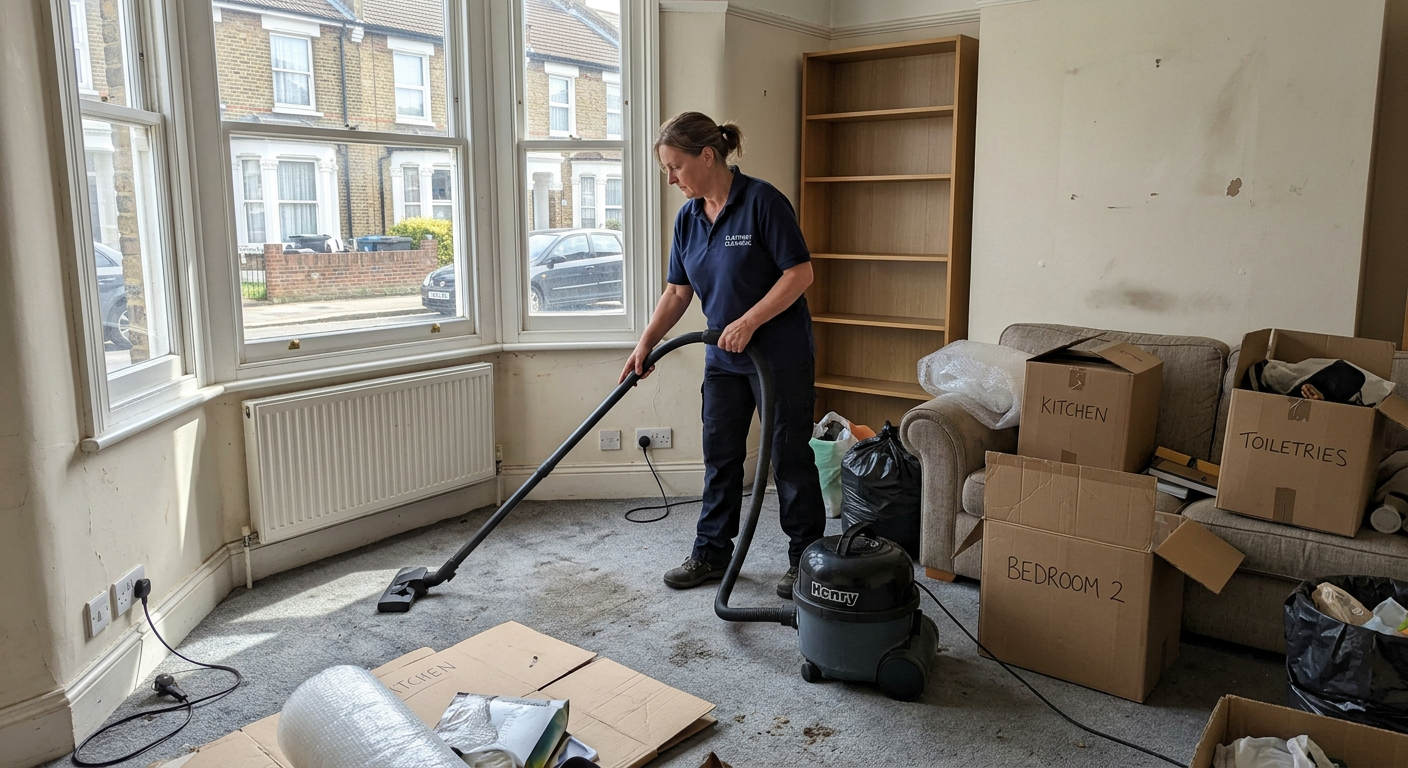
A defensible checkout clean is executed against a written schedule, element by element. The following is the standard applied by professional firms operating to inventory-grade specifications across the borough, and it constitutes the benchmark against which a landlord's claim of inadequate cleaning will be measured.
| Zone | Required intervention | Failure evidence an adjudicator will accept |
|---|---|---|
| Oven and grill | Roof, sides, back panel, door glass inner and outer, runners, shelves and pan degreased to bare enamel | Photograph of carbonised residue with scale reference |
| Extractor hood | Filter degreased or replaced; canopy interior and exterior cleaned; lamp covers cleared | Sticky polymerised fat on canopy interior |
| Hob and splashback | Burner caps, rings, printed zones, glass and splashback cleared of all residue | Residue ring around burner bases |
| Cupboards and drawers | Interiors emptied, vacuumed, wiped including runners, hinges and top surfaces | Crumb or grease film inside carcass |
| Fridge, freezer, washer-dryer | Defrosted, drained, seals cleaned, detergent drawer and filter cleared | Mould in door seals; lint in filter |
| Toilet pan and cistern | Acid descale of water line and under-rim; cistern interior wiped; seat and hinges disinfected | Visible scale ring at waterline |
| Shower screen and tray | Full acid descale to clarity; tray, waste and screen channels cleared; sealant treated | Opacity on glass; residue in channel |
| Tapware and aerators | Aerators unscrewed and descaled; chrome polished without abrasive | Reduced flow; visible encrustation |
| Zone | Required intervention | Notes on adjudication |
|---|---|---|
| Skirting, architrave, door heads | Wiped to reveal; tops of doors and frames cleared of settled dust | High-level dust is never fair wear and tear |
| Internal glazing | All glass, frames, tracks and sills; sash runners cleared | External faces only if demised |
| Radiators | Fins and rear faces cleared of dust and debris | Frequently cited in landlord inventories |
| Carpets and upholstery | Vacuumed; professional hot-water extraction where staining or odour is present | See steam carpet cleaning in Plaistow |
| Balcony and glazing | Swept, railing wiped, glass cleaned where within the demise | Contestable if outside demised area |
| Communal access | Hallway and stairs within the property only | Common parts are the freeholder's cost |
7. Evidence Architecture: Building a Dispute-Proof File
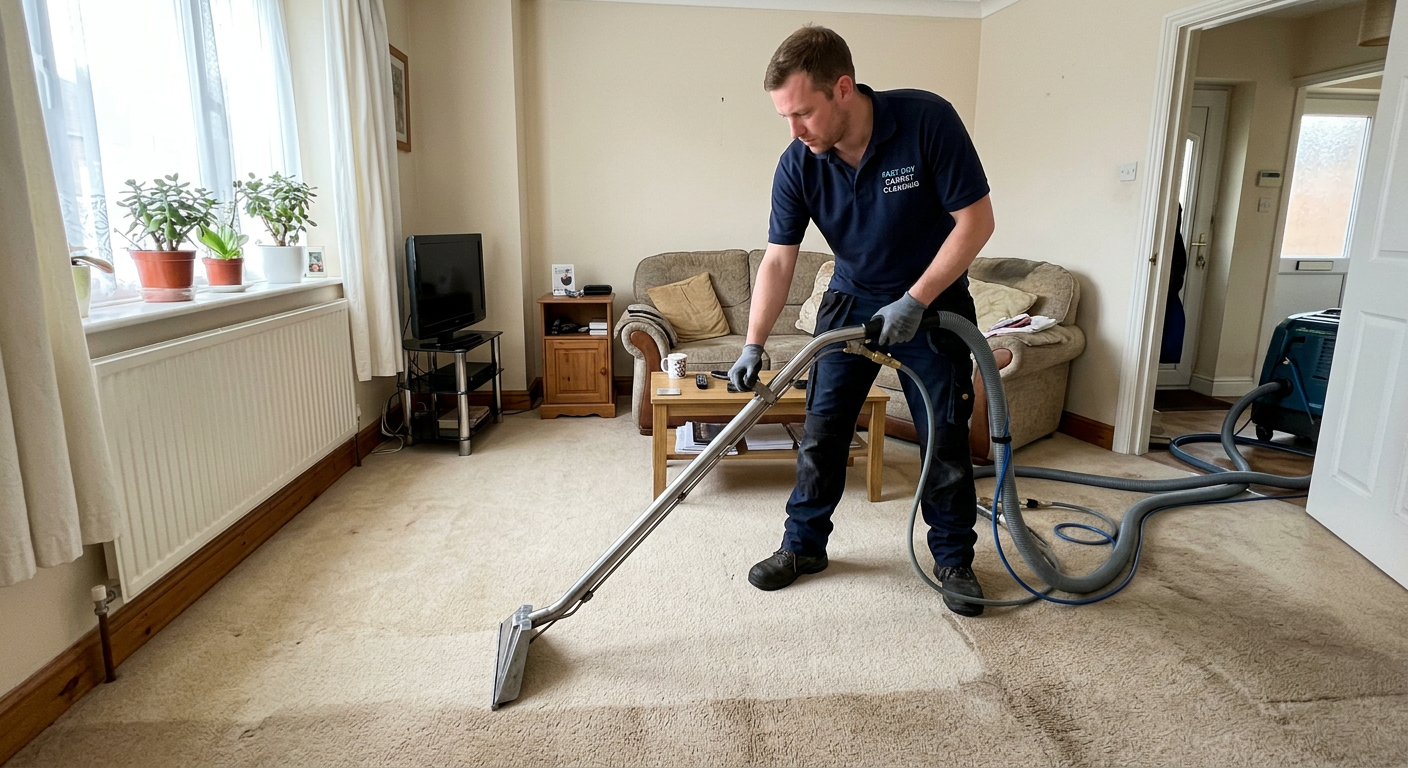
A checkout clean without documentation is only half the work. The evidentiary file should be assembled in a defined sequence and retained for the full period during which a dispute may be raised — a minimum of six months, and longer where a deduction remains unreconciled.
The file should contain: the original signed inventory with its date; the check-out schedule, signed by both parties if possible; time-stamped photographs of every element listed in the landlord's claim, taken with a scale reference and at sufficient resolution to show surface condition; a dated invoice from the cleaning provider with an itemised scope; and any correspondence in which completion was reported to the landlord or agent. Where a dispute is raised, the tenant is entitled to a written response and to refer the matter to the scheme's free adjudication service — a process that is documentary and does not involve a hearing.
Three practical disciplines materially improve outcomes. Photograph the property on the day of check-in as well as check-out, matched element by element. Retain the check-in inventory in full, including any handwritten amendments. And where the tenancy is being managed by a licensed landlord under the borough's selective licensing regime, note that licensing conditions impose obligations around property condition and management that are independent of the deposit position; these are addressed in detail through our Newham cleaning services technical guidance. If you require an itemised, dated completion record that will withstand adjudication scrutiny, our dispatch desk on 020 8079 9511 (tel:02080799511) issues documentation with every checkout.
8. Pricing Transparency and the Cost of Getting It Wrong
The economics are unambiguous. A contested cleaning deduction of £250 to £500 is typically the largest single line a tenant will face, and it is frequently claimed for work that a documented professional clean would have forestalled at a comparable cost. The table below sets out the editorial benchmark for checkout pricing across East London; these are the figures we publish so that tenants, landlords and agents can assess any quotation against a transparent standard.
| Property type | Benchmark range | Scope included |
|---|---|---|
| Studio / 1-bedroom flat | £140 – £175 | Full kitchen degreasing, bathroom descaling, internal windows |
| 2-bedroom property | £190 – £240 | All cupboards, skirting, appliances and internal frames |
| 3-bedroom house | £250 – £320 | All rooms, stairs, internal windows, woodwork, heavy kitchen grime |
| 4+ bed townhouse / HMO | £330 – £440 | Multi-floor team dispatch, all chemicals included |
Landlords and letting agents across end of tenancy cleaning in Canning Town and end of tenancy cleaning in East Ham increasingly commission pre-checkout cleans directly, because a documented professional clean reduces both the volume of disputes and the administrative cost of defending them. Tenants retain the absolute right, under the Tenant Fees Act 2019, to decline any contractor nominated by an agent — but they do not retain the right to return the property in a deteriorated condition.
9. Conclusion: The Standard Is Documented, Not Asserted
The London tenancy deposit regime is frequently described as weighted in favour of the landlord. The adjudication data does not support that reading. Cleaning disputes — the dominant category at 54% — are decided on documentation, and the documentation burden falls on the party making the claim. Where a check-in inventory exists, where photographs are dated and comparative, and where the tenant has obtained an itemised completion record, speculative deductions collapse. Where those elements are absent, even a genuinely clean property can lose £250 to £500 on assertion alone.
The practical prescription is therefore not a matter of effort but of method: understand the statutory limits imposed by the Tenant Fees Act 2019 and the doctrine of betterment, recognise the specific chemical challenges imposed by East London's very hard water, account for the architectural profile of your property, and ensure that whatever cleaning is performed is evidenced in writing. Tenants, landlords and agents who require assistance with a compliant, fully documented checkout across Newham and Greater London can reach our technical dispatch team on 020 8079 9511 (tel:02080799511) for fixed quotations, same-day scheduling and certified completion records.